
Vol. 14 · Issue 2
Methodology
The Reproducibility Question
Browse →
"Strip every sentence of ornament. What remains will be as clear as the idea permits."
The demand for "accessible writing" has been weaponized against precision. When a reviewer asks an author to make their argument simpler, they are often asking them to make it wrong. A complex phenomenon described simply is not a gift to the reader — it is a lie told for comfort. What the editor owes the author is this: the discipline to strip every sentence of ornament, every paragraph of throat-clearing, every section of defensive hedging — and nothing more. What remains will be as clear as the idea permits, and not one syllable clearer.
"Every decision letter names the exact sentence where the argument first loses its footing."
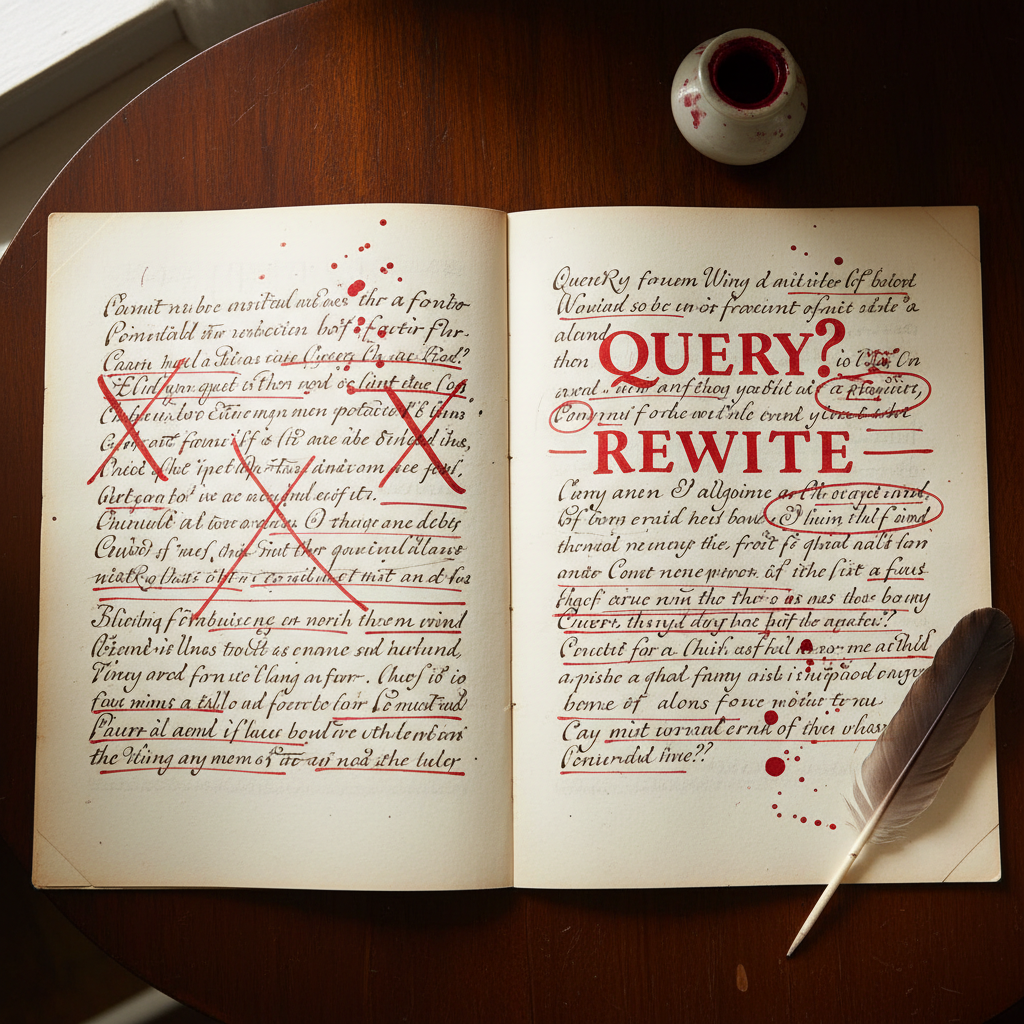
A form rejection is an editorial failure. If a manuscript reaches peer review, the editor has already made a judgment about its potential — and potential unrealized deserves a map, not a door closed in silence. Every decision letter this journal sends names the specific sentence where the argument first loses its footing, the exact paragraph where the evidence stops bearing the weight placed on it. We have seen researchers return eighteen months later with work transformed by a single annotated page. That is not rejection. That is the slow work of a field correcting itself.

"A reader who finishes an issue should feel the pressure of an unresolved problem."
Most journals are archives. They collect the best available work in a period and bind it together. Byline is an intervention. Each issue is organized around a question the field has not yet answered cleanly — and the papers are selected, sequenced, and sometimes commissioned to force that question into the open. A reader who finishes an issue should feel the intellectual pressure of an unresolved problem. They should be uncomfortable in a productive way. They should need to write something.

The abstract below arrived in submission. The version that ran was produced in a single editorial pass — no content removed, no argument changed. Only the architecture.
This paper examines the relationship between institutional pressures and academic output quality in the context of neoliberal restructuring of higher education systems, with particular attention to the ways in which metric-based evaluation frameworks have been shown in multiple recent studies to produce a set of incentive structures that may be understood as fundamentally misaligned with the traditional scholarly values of rigor, depth, and long-term intellectual contribution, as evidenced by citation pattern analysis conducted across multiple disciplines over a fifteen-year period.
Reproduced with the author's permission, eighteen months after the paper was eventually published — in a different journal, with a sharper argument — following this decision.
Names, institutions, and the specific field have been removed at the author's request. The annotations in red are the author's own, added retrospectively.
Byline
Journal of Scholarly Record
Decision: Major Revision
Ref: BYL-[REDACTED]
Dear [Author],
Thank you for submitting your manuscript to Byline. Three reviewers have now read it carefully. Their reports are enclosed. I write separately because the reviewers have identified a difficulty that is mine to name directly: the paper does not yet know what it argues.
This is not a criticism of your research. The data in Section 3 are genuinely novel and your literature review is admirably thorough. The problem is structural. You have written a paper that is simultaneously about three things — the institutional mechanism, the individual response, and the field-level consequence — without committing to the relationship between them.
I am asking you to make a choice. Specifically: paragraph four of your introduction contains your argument. It is currently a subordinate clause. Make it a declarative sentence and build backward from it. The paper you will write from that sentence is the paper this journal will publish.
I recognise this requires substantial restructuring. I am willing to review a revised manuscript. There is no deadline pressure. Do this work at the pace it requires.
[Editor's signature — redacted]




The submission guidelines are not a checklist. They are a statement of what this journal believes scholarship should be. Read them before you write. The paper you send us should be in conversation with them.
The PDF below is typeset to the same standard we apply to published work. It is, itself, an example of editorial practice.
"We do not accept work that is complete. We accept work that is necessary — work that the field cannot afford not to have."
— From the editorial statement, Vol. 1 Issue 1